
Prefab & Modular Healthcare
How Prefabricated Healthcare Facilities Can Support Remote Communities
Prefabrication can reduce the amount of building work that must be completed at a remote site, but the right solution still depends on clinical requirements, logistics, utilities, and local conditions.
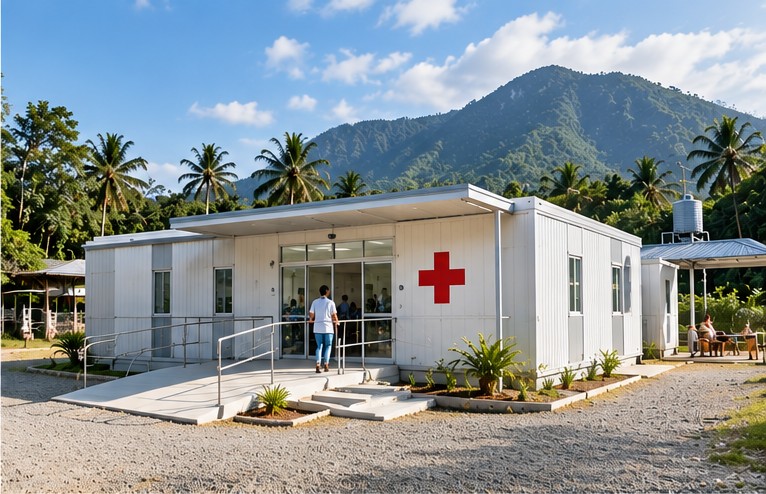
Remote healthcare projects often operate under different constraints from urban construction. Site access may be limited, skilled labour may not be continuously available, material deliveries may require long transport routes, and weather can affect site activities. Prefabricated healthcare facilities can help by shifting a significant part of building preparation into a controlled manufacturing process before components are delivered for site installation.
Prefabrication, however, should not be treated as a shortcut around healthcare planning. The facility still needs to be developed around its intended clinical services, patient and staff flow, room programme, utilities, equipment interfaces, environmental conditions, and applicable project requirements. A compact clinic for basic outpatient care will have a different configuration from a maternity clinic, diagnostic facility, or community healthcare centre.
Audie Medical combines prefabricated building capability with healthcare-facility planning and medical-equipment coordination. This allows the building system, room requirements, utilities, and equipment interfaces to be considered within one project framework. For remote communities, the value of this approach is the ability to develop a facility that is practical to manufacture, transport, install, equip, and operate according to the approved project scope.
Planning a Healthcare Project?
Explore Audie Medical prefab clinic solutions or discuss a project-specific configuration.